
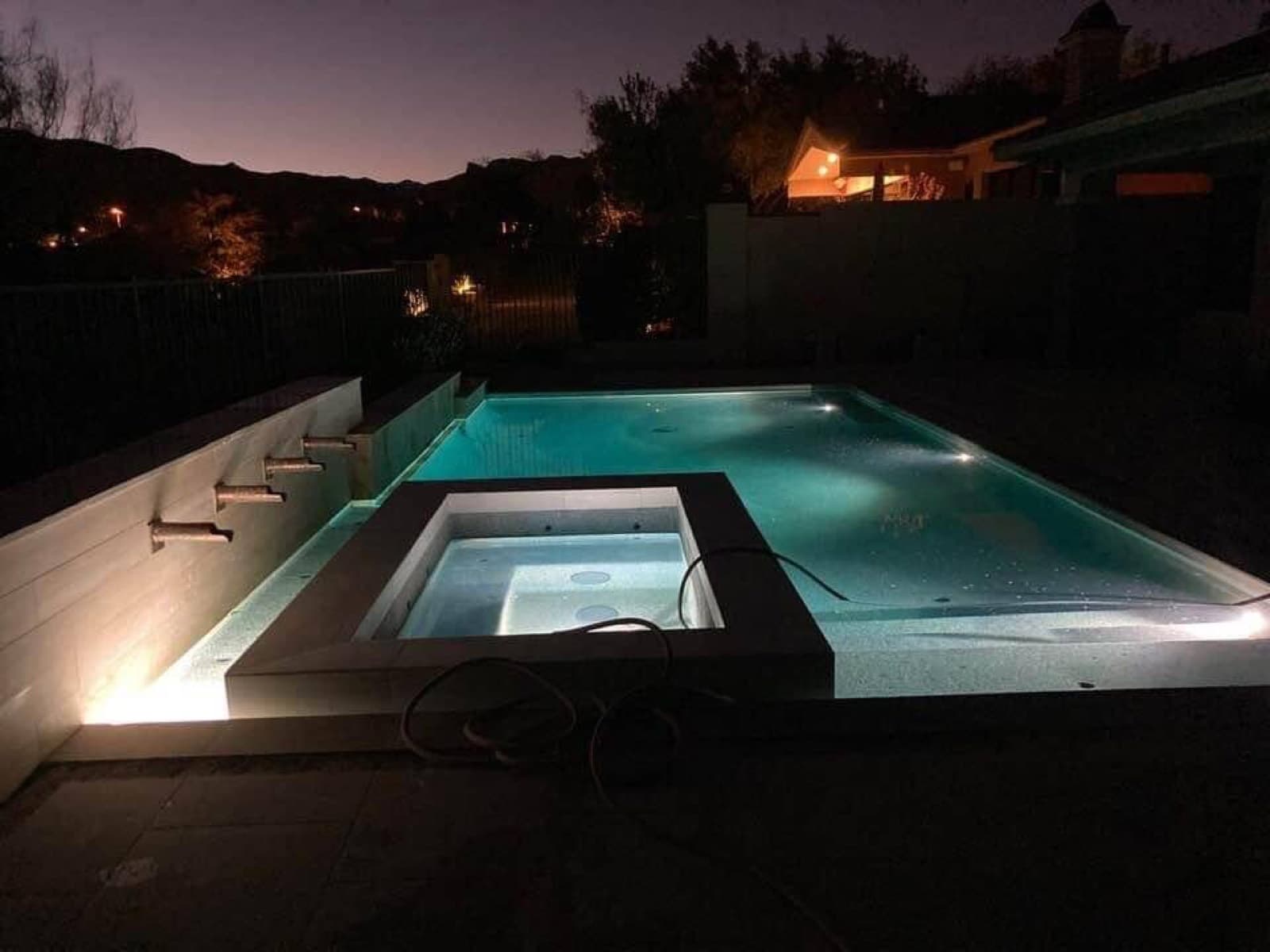
Pool Lighting Ideas
The Benefits of Pool Heating
Quick answer: For Northeast Georgia, an electric heat pump is the best value — efficient season extension from March into November. Choose gas for fast, on-demand spa heating; pair with a cover to hold the heat overnight.
Northeast Georgia summers are long, but a heater turns a three-month pool into a seven- or eight-month one — comfortable swimming from spring through late fall, and a spa you can use year-round. Here’s how the three main heating options compare, and which tends to make the most sense in our climate.
Heat pumps
For most Georgia pools, an electric heat pump is the sweet spot. Instead of creating heat, it moves warmth from the surrounding air into the water, which makes it remarkably efficient — often delivering four to six units of heat for every unit of electricity it uses. The catch is that it works best when the air is above roughly 50°F and it heats gradually. In zone 8a that’s a perfect match: our shoulder seasons are mild, so a heat pump extends the season cheaply without the high running cost of gas.
Gas heaters
Natural-gas or propane heaters heat fast and work in any weather, which makes them ideal for spas and for owners who want the pool warm on demand rather than maintained all season. The trade-off is operating cost — gas heaters are cheaper to buy but more expensive to run, so they shine for quick, occasional heating rather than holding temperature for weeks.
Solar heating
Solar collectors use the sun to warm your water and have the lowest operating cost of all — essentially free heat once installed. The limitations are that performance depends on sunshine and you need adequate panel area (usually on the roof). Many owners pair solar with a heat pump so the sun does the work when it can and the heat pump fills the gaps.
Which should you choose?
- Best all-around for NE Georgia: a heat pump, for efficient season extension.
- Fast, on-demand heat / spas: gas.
- Lowest running cost, if you have sun and roof space: solar, often alongside a heat pump.
A heated pool also pairs naturally with a cover to hold the warmth overnight and an automation system to schedule heating efficiently — both of which we design in from the start. See how it all comes together in smart pool technology.
How to size a pool heater
Sizing depends on your pool's surface area, the temperature you want, and how fast you want to get there. Bigger water surface loses more heat, so larger pools need more capacity. A gas heater is rated in BTUs; a heat pump in BTUs and by the air temperature it can work in. Undersize it and the pool never quite reaches temperature on cool days — we calculate the right size for your specific pool and goals.
Cutting your heating costs
The single biggest money-saver is a cover — a pool loses most of its heat off the surface overnight, and a cover keeps it in. Beyond that, run heating on a schedule through automation, set a sensible target temperature, and consider pairing a heat pump with solar so the sun does the free work. Efficient heating is as much about holding heat as making it.
Heater maintenance and lifespan
Keep the area around the unit clear, keep your water chemistry balanced (unbalanced water corrodes heat exchangers fast), and have it serviced periodically. A well-maintained heat pump or gas heater lasts many years; neglected chemistry is what kills them early. Balanced water protects every piece of equipment downstream.
Frequently asked questions
What's the best pool heater for Northeast Georgia?
An electric heat pump is usually the best value here — our mild shoulder seasons let it extend the swim season efficiently. Gas is better for fast, on-demand heat and spas.
How much does it cost to heat a pool?
It depends on the heater type, your target temperature, and whether you use a cover. A cover is the biggest single way to cut heating costs by holding heat overnight.
Can I swim year-round with a heater?
You can comfortably extend to roughly March–November with a heat pump, and use a heated spa year-round. True winter swimming usually needs gas heat.
Related guides
- The Future of Pool Technology
- How to Winterize Your Pool
- Custom Spa & Hot Tub Integration
- The Best Time to Build a Pool in Georgia
Thinking about a custom pool in Northeast Georgia?
CraftYourPool designs and builds custom in-ground pools across Northeast Georgia from our home base in Braselton — factory-direct pricing, a full 3D design of your actual backyard before you commit, and pool-ready in 6–8 weeks. We’re a licensed Georgia residential contractor and certified Pentair installer. See financing options or get a free consultation — call (762) 425-9249.
About the author
Brian Hemingway brings over 30 years of experience in the pool and outdoor-living industry and serves as a consultant and writer for CraftYourPool, a licensed Georgia residential contractor and certified Pentair installer building custom in-ground pools across Northeast Georgia. Questions about your project? Call (762) 425-9249.
Ready to Design the Backyard You’ve Been Imagining?
Let’s create something extraordinary together.