
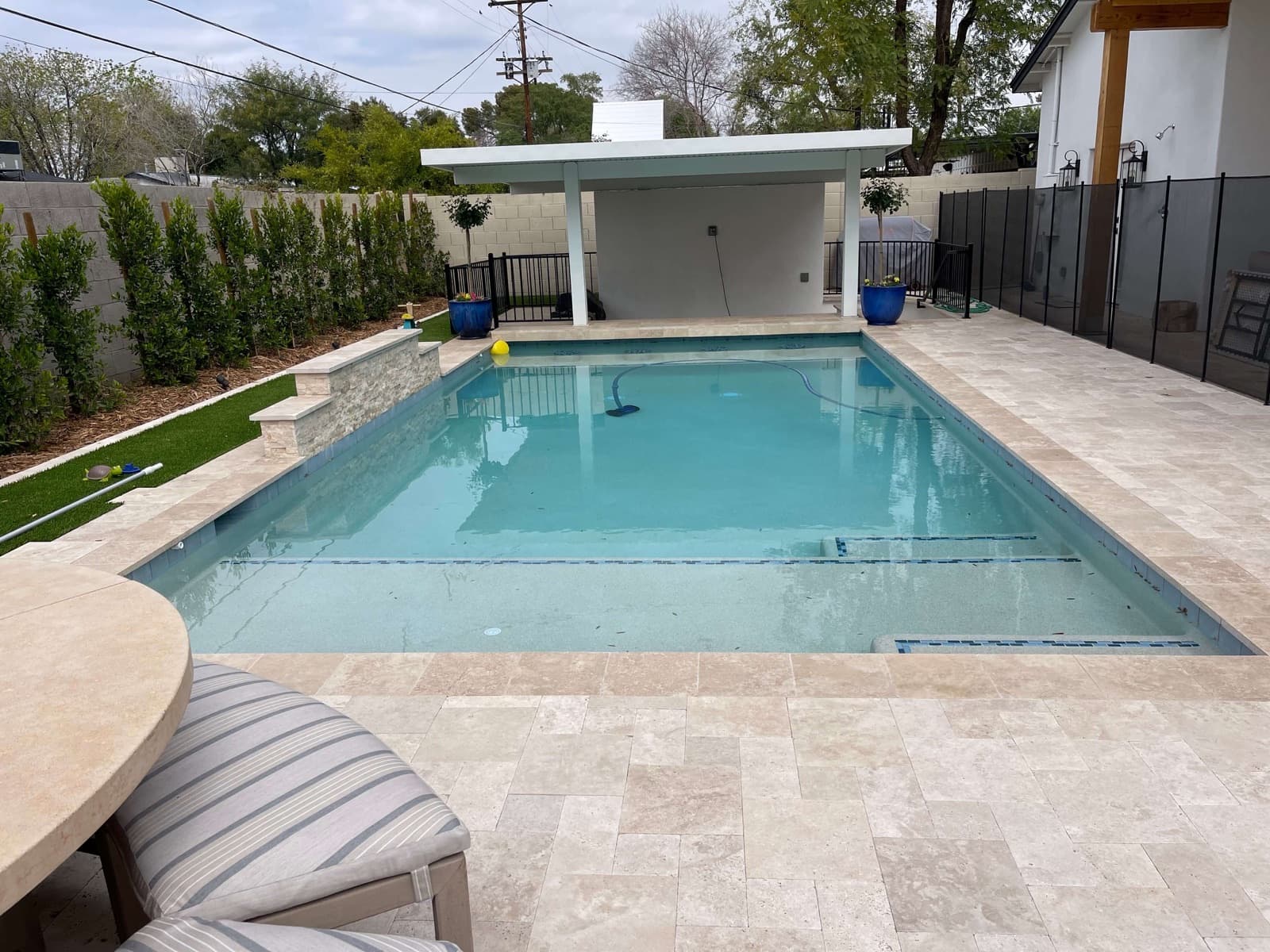
Pool Lighting Ideas
The Ultimate Guide to Pool Maintenance
Quick answer: Keep a pool clean with three habits: run the pump 8–12 hours a day, keep the filter clean, and test chlorine and pH twice a week. In Georgia, add daily skimming during spring pollen and freeze protection on the few hard-freeze nights.
A well-maintained pool is clean, safe, and cheap to run; a neglected one turns green, eats equipment, and costs a fortune to recover. The good news: pool care in Northeast Georgia comes down to three things done consistently — circulation, filtration, and water chemistry — plus a little seasonal cleaning. This guide walks through a complete year-round routine you can actually keep up with.
The three pillars of a clean pool
Almost every water-quality problem traces back to one of three systems. Get these right and the pool largely takes care of itself.
- Circulation — water has to move. Run your pump long enough each day to turn the whole pool over at least once. In our hot Georgia summers, plan on 8–12 hours daily; a variable-speed pump does this quietly and cheaply.
- Filtration — your filter removes the debris and fine particles circulation brings to it. Clean or backwash it on schedule (see our guide to pool filters).
- Chemistry — balanced water keeps things sanitary and protects the surface and equipment. More on that in our pool chemicals guide.
Your weekly routine
Fifteen to thirty minutes, once or twice a week, prevents almost every expensive problem:
- Skim the surface and empty the skimmer and pump baskets.
- Brush the walls, steps, and any dead spots where algae likes to start.
- Vacuum (or let your robotic cleaner run) — see our DIY cleaning guide.
- Test and adjust chlorine and pH; shock if the water looks dull or after heavy use.
- Check the water level — it should sit at the middle of the skimmer.
Monthly checks
Once a month, test the fuller chemistry panel — total alkalinity, calcium hardness, and stabilizer (cyanuric acid) — not just chlorine and pH. Inspect the filter pressure; a reading 8–10 PSI above the clean baseline means it’s time to clean or backwash. Take a quick look at the pump, heater, and any automation for leaks or error codes.
Seasonal pool care in Northeast Georgia
Our climate (USDA zone 8a) is mild, which makes pool ownership easier here than in the North — but each season still has a job:
- Spring — pollen is the enemy. Skim often, run the filter longer, and balance the water before the first warm swim.
- Summer — heat and bather load burn through chlorine fast; test more often and keep stabilizer in range so the sun doesn’t destroy your chlorine.
- Fall — leaves. A cover or daily skimming saves your filter and your back.
- Winter — mild Georgia winters mean many pools stay open; just protect against the occasional hard freeze. See our winterizing guide.
When to call a professional
DIY maintenance covers the routine, but bring in a pro for green-to-clean recoveries that won’t clear, persistent equipment faults, surface cracks or staining, or anything involving electrical bonding. A small service call almost always costs less than the damage from waiting.
Common pool problems and quick fixes
Cloudy water is usually a filtration or chemistry issue — check that the filter is clean and running long enough, then test pH and chlorine. Algae (green, or slippery walls) means the chlorine got too low; brush, shock, and run the filter around the clock until it clears. Weak return flow points to a clogged basket or dirty filter. Most "mystery" problems are really one of the three pillars slipping out of balance.
Saltwater vs. chlorine — maintenance differences
A saltwater pool isn't chlorine-free — a salt cell makes the chlorine for you from dissolved salt, so you handle far less stored chemical. The chemistry targets are the same; you just keep the salt level in range (around 3,000 ppm) and clean the cell of scale once or twice a year. Traditional chlorine pools cost less up front but ask you to add chlorine manually. Either way, circulation, filtration, and balance still rule.
A simple year-round maintenance calendar
- Twice a week: skim, empty baskets, test and adjust chlorine and pH.
- Weekly: brush and vacuum, wipe the waterline.
- Monthly: test the full chemistry panel, check filter pressure, inspect equipment.
- Seasonally: deep-clean the filter, adjust stabilizer, prep for pollen (spring) or freezes (winter).
Keep this rhythm and you'll almost never face a green-pool recovery.
Frequently asked questions
How often should I run my pool pump in Georgia?
In summer, aim for 8–12 hours a day so the whole pool turns over at least once. A variable-speed pump can run longer at low speed for less money and quieter operation.
Why does my pool keep turning green?
Green means chlorine dropped too low and algae took hold — often after heat, heavy use, or a storm. Brush, shock, and run the filter around the clock until it clears, then keep chlorine in the 1–3 ppm range.
Can I maintain the pool myself or do I need a service?
Most homeowners can handle the weekly routine themselves. Call a pro for green-to-clean recoveries, equipment faults, or anything electrical.
Related guides
- DIY Pool Cleaning Tips
- Understanding Pool Chemicals
- Choosing the Right Pool Filter
- Saltwater vs Chlorine Pools in Georgia
- Pentair Pool Equipment: Why We Use It
Thinking about a custom pool in Northeast Georgia?
CraftYourPool designs and builds custom in-ground pools across Northeast Georgia from our home base in Braselton — factory-direct pricing, a full 3D design of your actual backyard before you commit, and pool-ready in 6–8 weeks. We’re a licensed Georgia residential contractor and certified Pentair installer. See financing options or get a free consultation — call (762) 425-9249.
About the author
Brian Hemingway brings over 30 years of experience in the pool and outdoor-living industry and serves as a consultant and writer for CraftYourPool, a licensed Georgia residential contractor and certified Pentair installer building custom in-ground pools across Northeast Georgia. Questions about your project? Call (762) 425-9249.
Ready to Design the Backyard You’ve Been Imagining?
Let’s create something extraordinary together.