
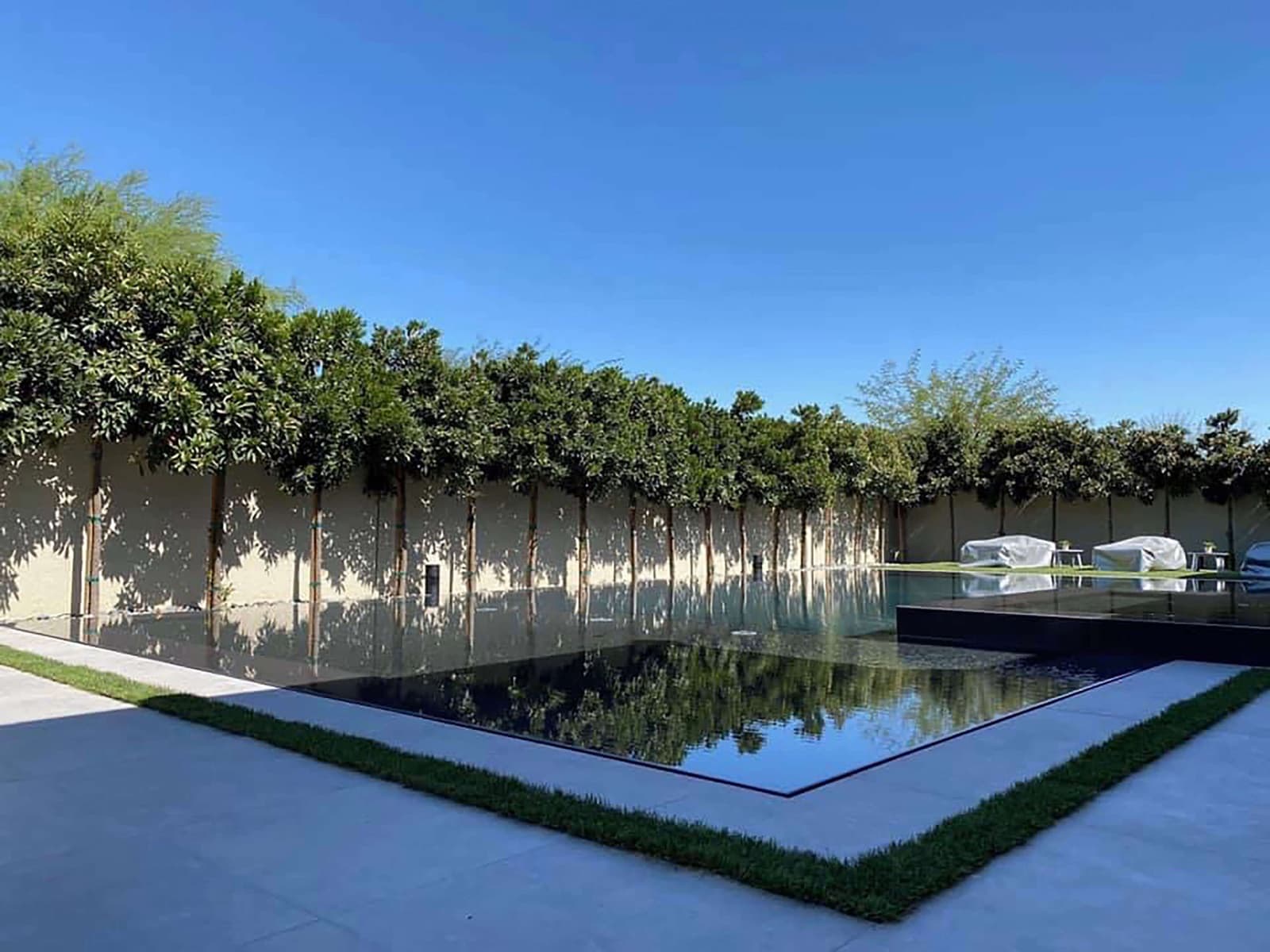
Modern Backyard Pools
Concrete vs Fiberglass Pools: Which Is Right for Your Georgia Home?
Quick answer: Choose concrete/gunite for custom shapes, sloped lots, and Georgia's clay soil; choose fiberglass for lower upfront cost and minimal upkeep when a pre-molded shape fits your yard. Fiberglass runs roughly $10,000–$20,000 less upfront; a concrete pool lasts indefinitely with periodic resurfacing.
This is one of the first decisions every pool buyer faces, and there's a lot of biased advice out there — mostly from companies that only sell one type. Here's the honest comparison for Georgia conditions: what each type really costs, how they hold up in our climate and soil, and how to decide which fits your yard and your goals.
The short version
- Concrete (gunite) — fully custom: any shape, size, depth, or feature. Extremely durable. Costs more up front and needs resurfacing every 10–15 years.
- Fiberglass — a pre-molded shell set into the ground. Faster to install, smooth low-maintenance surface, but you're limited to the manufacturer's catalog of shapes and sizes (max ~16' wide for road transport).
Design freedom — the biggest real difference
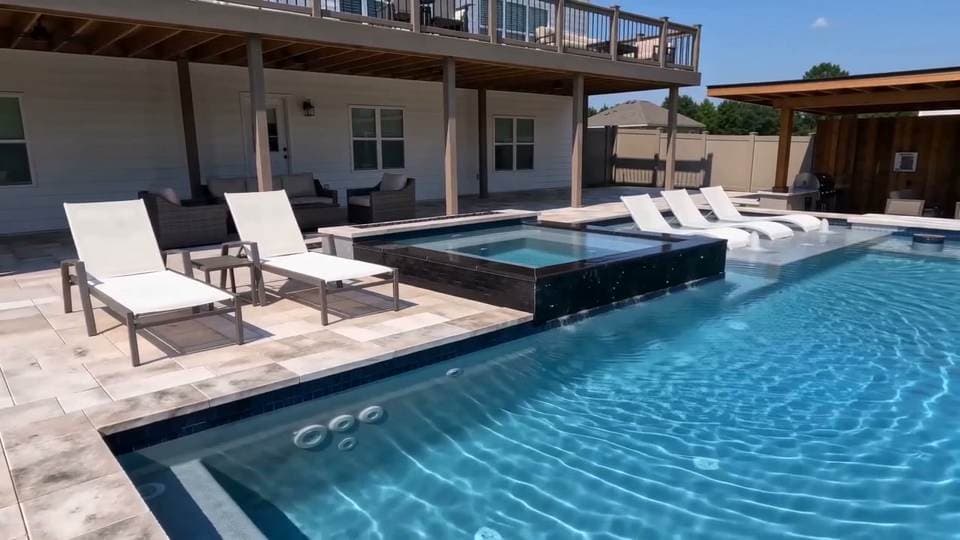
If you want a true custom pool — a negative edge looking over a Lake Lanier slope, an oversized tanning ledge, a raised spa spilling into a free-form shape, a pool that fits an odd lot line — that's concrete. Fiberglass shells come in fixed molds; you pick the closest fit. That's why nearly everything we render in 3D design for clients with specific visions ends up gunite: the design drives the build, not the mold catalog.
Cost comparison, honestly
Fiberglass usually starts cheaper — often $10,000–$20,000 less up front for a comparable size. But the gap narrows once you add real decking, equipment, and features, and it can invert over the life of the pool: fiberglass gel coats have finite lifespans and a failed shell is a major problem, while a concrete pool is resurfaced on a predictable cycle and essentially lasts forever. (Full cost context in our Georgia pool cost guide.)
How each handles Georgia conditions
- Red clay soil — Georgia's expansive clay swells and shrinks with moisture. A properly engineered concrete shell with steel reinforcement is built for it. Fiberglass shells can shift or bulge if backfill and water tables aren't managed carefully — installer skill matters enormously.
- Sloped lots — common across Northeast Georgia, from Gainesville to Cleveland. Concrete adapts to the grade (terraced designs, retaining walls, infinity edges); fiberglass wants a flat, stable excavation.
- Our long season — zone 8a means 8+ swimmable months with heating. Both types handle it fine; surface choice matters more for feel than climate here.
Maintenance differences
Fiberglass's gel coat is genuinely low-maintenance — algae struggles to grip it and it's gentle on chemicals. Concrete finishes (plaster, quartz, pebble) need consistent water balance (see our chemistry guide) and brushing, and a resurfacing roughly every decade-plus. If your priority is absolute minimum upkeep and a catalog shape fits your yard, fiberglass earns real points here.
So which should you choose?
- Choose concrete/gunite if: you want a custom shape or features, your lot slopes or has tricky soil, you're building a spa/ledge/water-feature design, or you're thinking in decades.
- Choose fiberglass if: a standard shape fits your yard and vision, you want the fastest install and lowest upkeep, and shell-size limits (~16' width) aren't a constraint.
Our bias, stated openly: most of our clients come to us for designs a mold can't produce, so most of what we build is fully custom. But the right answer starts with your yard — a free consultation and 3D rendering shows you exactly what your lot supports before you spend anything.
Frequently asked questions
Which lasts longer, concrete or fiberglass?
A properly built concrete pool is effectively permanent — the shell lasts indefinitely with periodic resurfacing. Quality fiberglass shells last 25–30+ years, but repair options are more limited if the shell itself fails.
Is fiberglass really faster to install?
The shell sets in days, yes — but total project time (excavation, plumbing, electrical, decking, inspections) still runs weeks. Our custom builds go from contract to pool-ready in 6–8 weeks, so the real-world gap is smaller than the marketing suggests.
What about vinyl liner pools?
Cheapest up front, but liners need replacing every 6–9 years and are the least durable option in our clay soils. For a long-term Georgia home, most buyers land on concrete or fiberglass.
Can you add a spa or tanning ledge to fiberglass?
Only if the mold includes one. With concrete, spas, ledges, beach entries, and custom steps are designed exactly the way you want them — that's the design-freedom difference in practice.
Get a real number for your yard
Averages only get you so far — the honest answer comes from your actual lot. CraftYourPool builds custom in-ground pools across Northeast Georgia from our home base in Braselton, with factory-direct pricing, a full 3D design of your backyard before you commit, and transparent itemized quotes. See financing options or call (762) 425-9249 for a free consultation.
About the author
Brian Hemingway brings over 30 years of experience in the pool and outdoor-living industry and serves as a consultant and writer for CraftYourPool, a licensed Georgia residential contractor and certified Pentair installer building custom in-ground pools across Northeast Georgia. Questions about your project? Call (762) 425-9249.
Ready to Design the Backyard You’ve Been Imagining?
Let’s create something extraordinary together.